
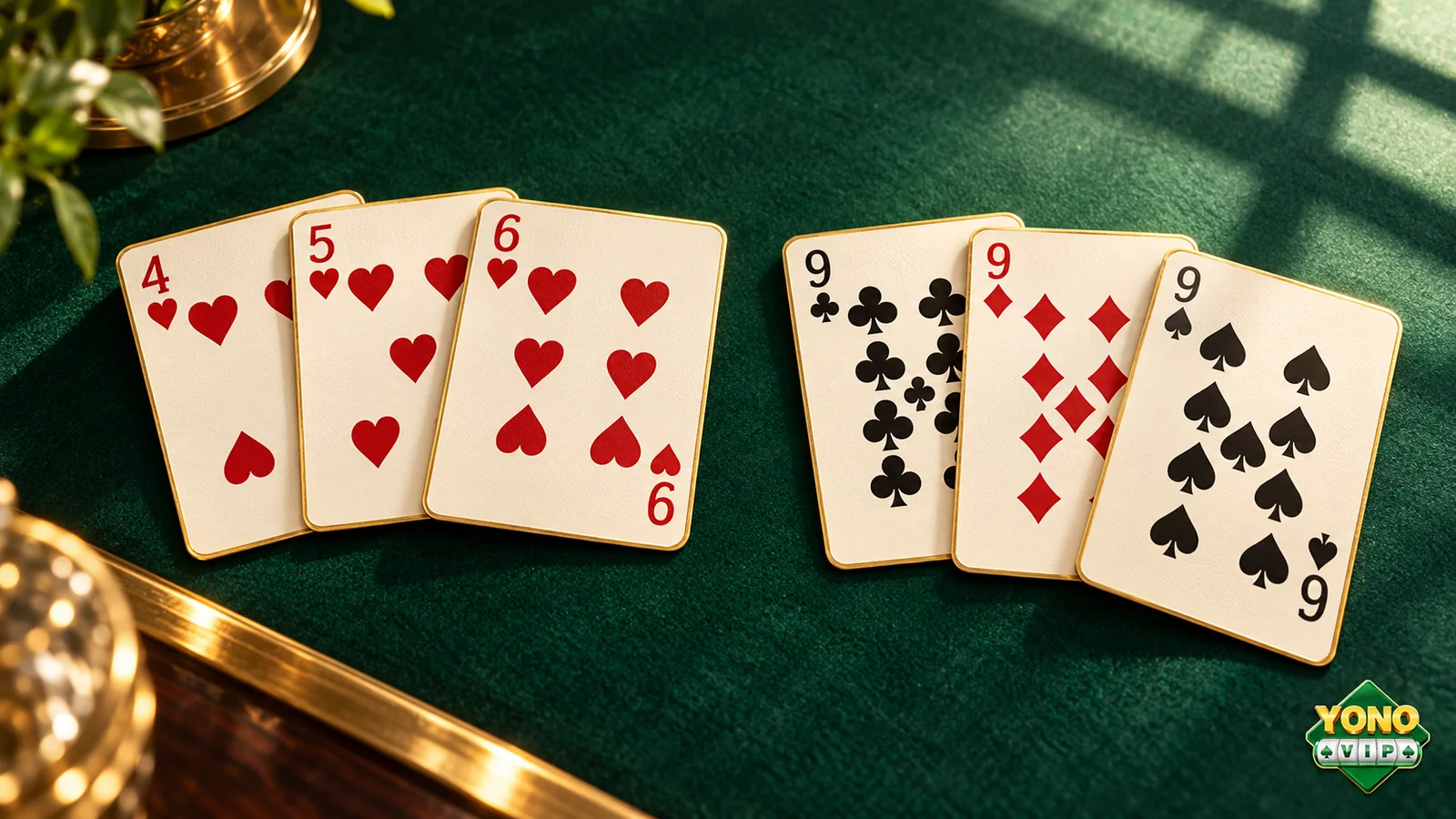
In Rummy, 4♥ 5♥ 6♥ is a sequence. 9♣ 9♦ 9♠ is a set. The first group follows a number order in one suit. The second keeps one number and changes suits.
That one difference makes a hand much easier to read. If you are exploring Yono VIP Rummy, keep these examples nearby before choosing a room.
Ready to open the app? Go to Yono VIP at yonovip.com, or use our Android download guide if you need it on your phone first.
Pure sequence: follow the numbers in one suit
Look at 4♥ 5♥ 6♥. All three are hearts, and the numbers follow each other. No joker stands in for a missing card, so this is a pure sequence in common 13-card Indian rummy.
Try the same check with 7♣ 8♣ 9♣ 10♣. There are four cards this time, but the pattern is the same: consecutive ranks, one suit, no substitute.
A useful way to check is to read both parts aloud: “four, five, six” and “hearts, hearts, hearts.” Looking only at the numbers misses half the picture.
Set: keep the rank, change the suits
Now look at 9♣ 9♦ 9♠. There is no run from one number to another. Each card is a nine, in a different suit. That makes it a set.
For this example, think of the number as the thing that stays still. The suit symbols are what change. Our Rummy beginner guide connects these groups with the wider game vocabulary.
Where does an impure sequence fit?
An impure sequence uses a permitted joker as a substitute. In 4♥ Joker 6♥, the joker fills the place of 5♥. The group is a sequence, but it is not pure.
A wild card used in its own natural position can be treated differently from one used as a substitute. Check the room's joker rules before deciding which group you have.
Try this quick card check
- 6♦ 7♦ 8♦: consecutive numbers in diamonds — a pure sequence without a substitute.
- Q♣ Q♦ Q♥: the same rank across three suits — a set.
- 6♦ 7♣ 8♦: consecutive numbers, but mixed suits — this group does not pass the same-suit sequence check.
Pause after each example and name what stayed the same. It is an easy way to practise before reading a full hand.
One good group is a start
In common 13-card Indian rummy, the declaration pattern needs at least two sequences, including a pure one, with the rest of the cards grouped correctly. A set does not replace that pure-sequence requirement.
These are general card-group examples. Yono VIP lists Rummy; the specific format, joker rules and declaration conditions come from the room you open. The RummyCircle rules reference explains the general sequence and set concepts used here.
Open Yono VIP and choose your next guide
Open Yono VIP and look for Rummy in the current game menu. Use this page for a quick group check, and keep the full Rummy guide for the next step.
Still deciding between card games? Read Rummy vs Poker, or browse the Yono VIP games hub.
Ready for your next game?
Get Yono VIP on your phone. Choose a game and start with the basics.
Related reading
Yono VIP on a New Phone: Login & Setup Checklist
New Android phone? Set up Yono VIP, use your existing sign-in and keep the old phone handy until you're back in. A quick moving-day checklist.
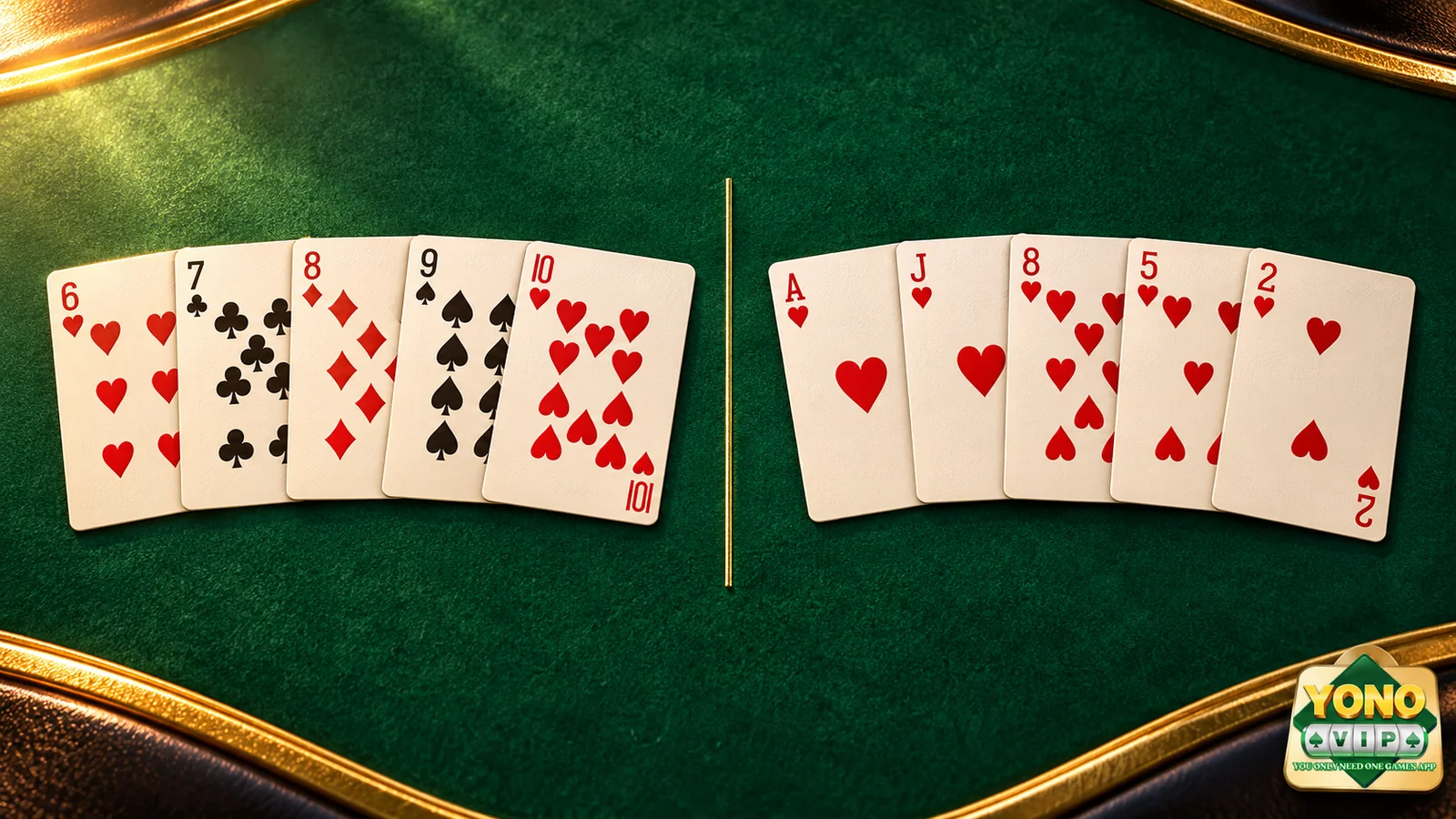
Yono VIP Poker: Straight vs Flush — Which Hand Wins?
A run of numbers or five cards of one suit? See the difference between a straight and a flush, with examples for your next Poker rules check.

Yono VIP App Update: Download the Current APK
Already have Yono VIP? Find the current app download, follow the update prompt and get back to your games. Includes update vs reinstall help.